How Deep Does a Boat Ramp Need to Be?
The honest answer: it depends on your boat, and on what the water's doing that day.
By Boat Ramp US Editorial Team · Last reviewed July 11, 2026
There's no single number that answers this for every boat, because the real question is how much water it takes to float your specific hull off your specific trailer - and that changes with water level, which changes by season and by the day.
Rough depth needed by boat type
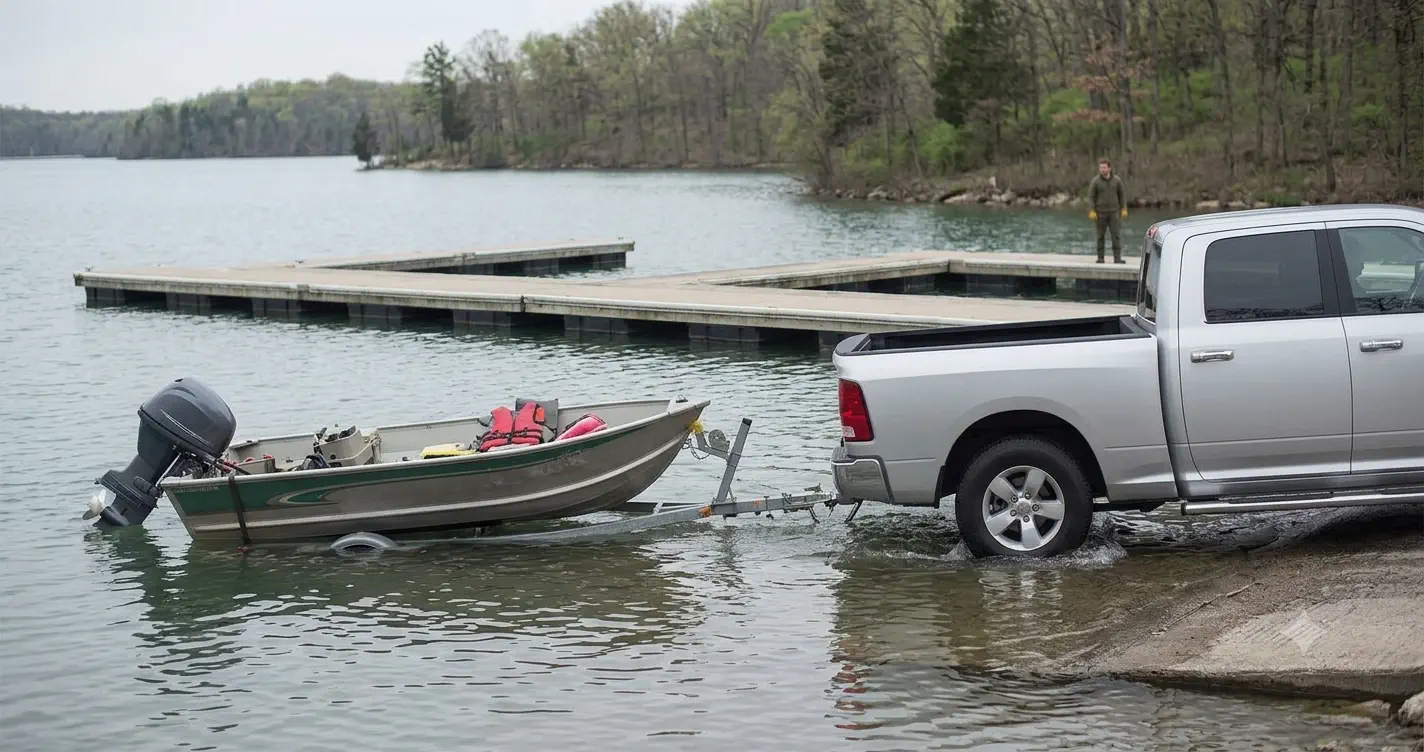
These are ballpark figures for the water depth at the end of the trailer bunks/rollers, not the depth of the ramp itself - you generally need a bit more ramp length submerged than just the boat's draft, since the trailer wheels need to be under water too before the hull floats free.
- Personal watercraft / small aluminum boats: often float free in 12-18 inches of water at the stern.
- Bass boats and bowriders: typically need 18-24 inches at the transom to float off cleanly.
- Pontoon boats: the pontoons themselves usually need at least 18-24 inches, but pontoons are also wider and more sensitive to a ramp that isn't level side-to-side.
- Larger inboard or deep-V hulls: can need 30 inches or more, especially with an outdrive or prop that needs clearance from the ramp surface.
Why the same ramp can be "enough" one week and not the next
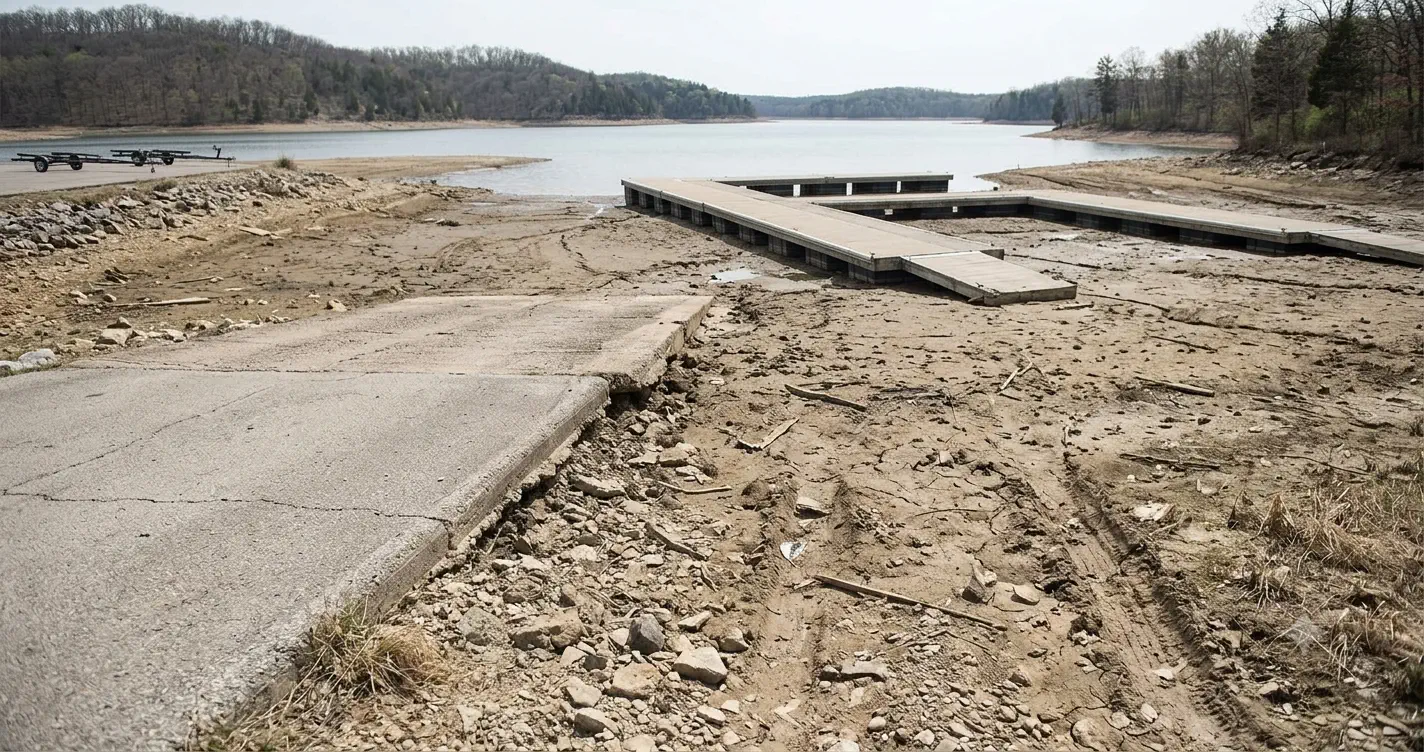
Reservoirs and lakes with water-level management (drawdown for flood control, irrigation releases, drought) can drop several feet over a season - enough to turn a normal ramp into one where the concrete ends well short of the water. Tidal ramps on rivers and coastal areas have the opposite problem on a much shorter cycle: a ramp that's fine at high tide can leave you stuck at low tide, sometimes by several feet within the same day.
How to actually check before you go
For reservoirs, the managing agency (Army Corps of Engineers, Bureau of Reclamation, or the state agency running the lake) usually publishes current lake level and, for some lakes, ramp-by-ramp status. For tidal ramps, a tide chart for that specific location tells you the actual predicted height at the time you're planning to launch - not just "high or low."
On this site, we track known ramp closures and low-water status where the source data reports it, along with when that status was last checked - worth a quick look before you drive out with a trailer, especially somewhere you haven't launched before.
Gear tip: A wireless trailer hitch backup camera earns its cost back the first time you're backing down an unfamiliar or narrow ramp and need to judge the waterline without guessing from the side mirrors.
How to choose: since this camera lives right next to the water every launch, prioritize a high waterproof rating (IP68/IP69K) over screen size - a cracked seal from repeated submersion is the most common failure mode in reviews, not the camera quality itself. A larger monitor is nice to have, but a magnetic mount that holds firm on a bumpy boat ramp approach matters more.
When in doubt, the safest move is to back down slowly, stop well before the water, and walk down to look at the actual waterline against the ramp before committing the trailer any further - see our boat ramp etiquette guide for how to do this without holding up the line behind you.