Boat Trailer Pre-Launch Checklist
Ten minutes in the driveway saves you an hour of trouble at the ramp.
By Boat Ramp US Editorial Team · Last reviewed July 11, 2026
Most trailer problems at the ramp aren't caused by the ramp - they're caused by something that was already wrong before you left the driveway. A bearing that was already running hot. A light that was already out. A strap that was already frayed. None of that is obvious until you're backing down a slope with a line of trucks behind you. This checklist is built around that idea: catch it at home, not at the ramp.
In this checklist
Before you leave home
Tires and wheels
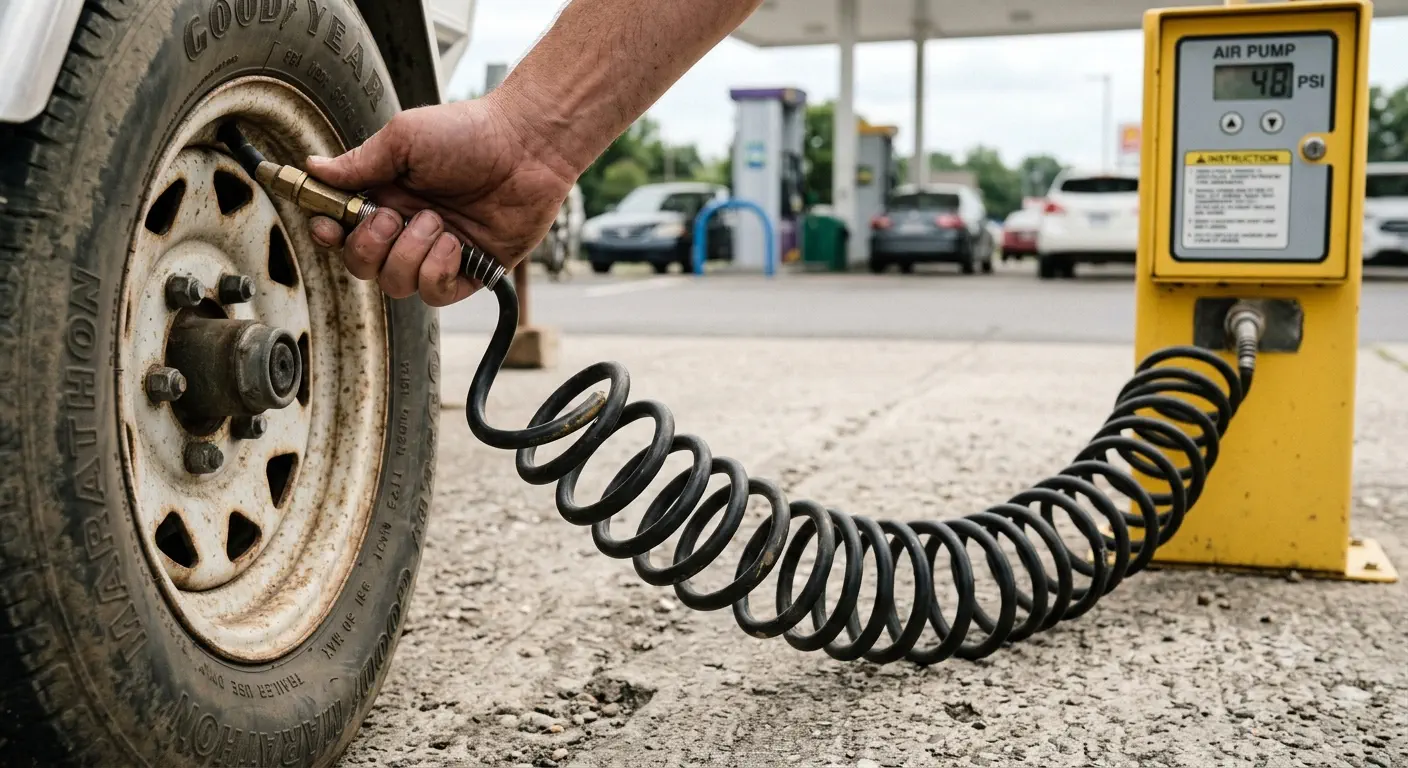
Check the pressure on both trailer tires when they're cold, and check the tow vehicle's tires too - a trailer adds weight even before the boat does. Look at the tread and the sidewalls for cracking; trailer tires often sit unused for weeks between trips and degrade from age and UV exposure well before the tread wears out.
If a tire is more than 5-6 years old, treat the date code seriously even if the tread still looks fine.
Hitch and safety chains
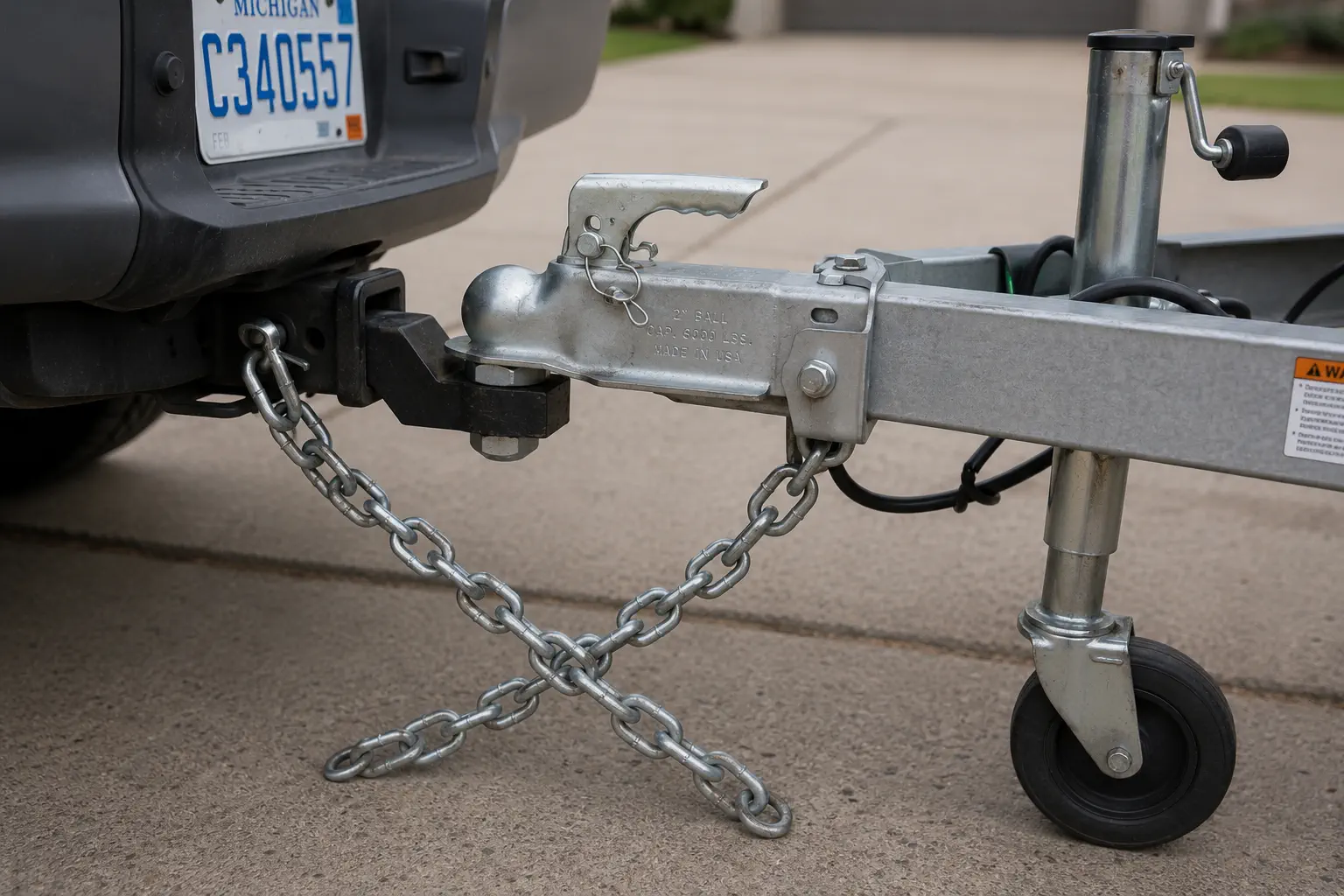
Confirm the coupler is fully latched and the safety pin or lock is in place, not just resting on top. Cross the safety chains under the tongue (this catches the coupler if it ever comes loose, instead of letting the tongue drop straight to the pavement) and make sure there's no slack dragging on the ground. Check the trailer plug is fully seated in the tow vehicle's socket.
Wheel bearings
After the drive to the ramp, carefully touch each hub (give it a minute after highway speeds before you check) and compare side to side. A hub that's noticeably hotter than the other, or too hot to hold your hand on for more than a second or two, is the bearing-running-hot scenario from the intro - stop and let it cool rather than backing straight down the ramp. While you're there, grip the top and bottom of each tire and rock it: noticeable wobble or a clunk usually means a worn bearing or a loose hub, not just normal tire play.
If your trailer has grease caps ("Bearing Buddies" or similar), check they're still full and not cracked or weeping grease onto the tire - that's an early warning sign that shows up well before a bearing actually fails. For the fuller maintenance picture beyond this pre-launch check, see our boat trailer maintenance basics guide.
Lights
Have someone stand behind the trailer (or back up to a wall/garage door and watch the reflection) while you test brake lights, turn signals, and running lights. Trailer wiring is exposed to water and road salt far more than your vehicle's own wiring, and it's the single most common thing to fail between trips.
Gear tip: A wireless magnetic trailer light kit is worth keeping in the tow vehicle as a backup - if a wired connection fails at the ramp, you can get legal running lights on in under a minute without any tools.
How to choose: prioritize waterproof rating (IP67 or better - the trailer frame gets fully submerged on every launch) and signal range if you're going wireless, since a weak connection between the transmitter and the light module is the most common complaint in reviews. For occasional use, a simple wired kit is one less battery to remember to charge.
At the ramp, before you back down
- Remove the transom straps and the winch strap's safety chain/hook only when you're ready to launch - not while you're still waiting in line, and not while the trailer is still on an incline above the water.
- Put the drain plug in. This sounds obvious until it's the reason someone's boat is taking on water twenty feet from shore.
- Load anything loose (life jackets, cooler, electronics) that could shift or fall in once the boat is floating and moving.
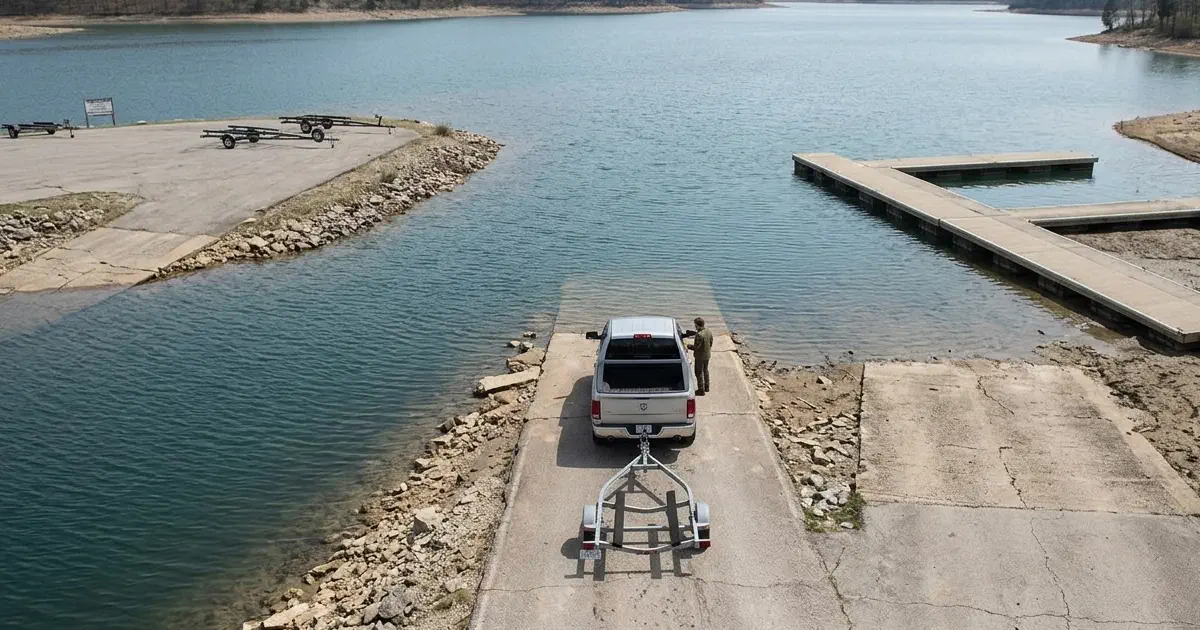
- Do a final look at the ramp itself - surface, slope, and how far the waterline actually reaches today - before you commit to backing down.
None of this replaces knowing your own boat and trailer, but if you run through these points every time, most of the ramp problems that ruin a trip simply won't happen in the first place.